
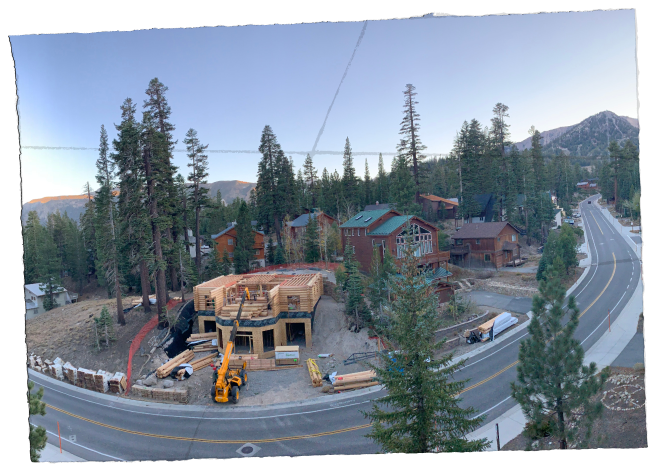
Before a single shovel of dirt is moved, the foundational work done here will set the trajectory for success, ensuring that your vision is not only inspiring but also practical and well-supported. This is your opportunity to replace uncertainty with a strategic, intelligent plan.
The chapters within this part are designed to empower you with clarity and control from the outset. By the end of Part I, you will have more than just an idea; you will have a validated blueprint for your legacy.
The first step to building with confidence is addressing two critical financial hurdles: the “Budget Reality Gap” and the “Appraisal Gap.” Most prospective owners focus on the cost of the log package, but this is only one component of the Total Project Cost.
We recognize that most people don’t know how to create a detailed cost estimate, which is why we developed the **Sierra Feasibility Study**. This powerful AI-driven tool is your starting point. By answering about 24 questions, the study generates a projected log home build estimate and compares it with what current builders are charging in your area.
Armed with this data, you can move forward with confidence, not guesswork. This two-step budget process, starting with our study, provides the financial clarity needed to build a home that honors both your aspirations and your financial stewardship.
This is your non-negotiable first step. Use our online AI tool to get a realistic estimate.
Review your Feasibility Study results, budget, and financing options with your Sierra Representative.
Use our templates to create your own budget. Include a contingency fund of 15-20%.
Share your preliminary budget with a builder to get professional feedback and identify blind
spots.
A truly great log home is designed from the inside out, shaped by the life you intend to live within its walls. Before you ever look at a floor plan, take the time to create a “Lifestyle Brief.”
This document is more valuable than any blueprint because it captures the heart of your vision. It asks you to think through daily routines, weekly patterns, and annual traditions. This brief becomes the essential guide for your design team, allowing them to craft spaces that are uniquely yours and prevents costly design regrets.
Click the button above to use our full, in-depth checklist. Be detailed and specific.Click the button above to use our full, in-depth checklist. Be detailed and specific.
Start a digital folder (like a Pinterest board) and/or a physical binder with images that resonate with you.
In one or two paragraphs, summarize the core purpose of your home. Is it a bustling hub or a peaceful retreat?
With your brief and folder in hand, schedule a productive first conversation with our design team.
Choosing a builder is the moment your dream becomes tangible, but it’s also a point of significant risk. The wrong choice can lead to budget overruns, frustrating delays, and a final product that doesn’t match your vision. The right builder, however, becomes the most critical steward of your family’s legacy.
This is why we don’t just hand you a list of names and wish you luck. As your trusted advocate, we see it as our duty to stand by your side. We provide the tools, expertise, and unwavering support to help you navigate this decision with clarity and confidence.
Our approach at Sierra is unique. We perform all design and engineering in-house. This integrated model is fundamental to our role as your steward because we possess an intimate, masterful understanding of how our log systems are engineered and assembled.
When evaluating land, it is crucial to understand that the **slope of the property will directly dictate a significant portion of the overall build cost.** A flat lot is the least expensive. A steep slope requires extensive excavation and complex engineering. A “topo map” is the indispensable tool that allows you to begin the design process with accuracy.
A proprietary guide to selecting the right partner for your legacy home.
Finding the right pool of potential builders is the foundational first step. A great custom home builder is often busy and may not be the one with the biggest advertising budget. Here are the most effective places to begin your search.
This is the core of our method, designed to systematically narrow your list down to the best possible candidates.
Before you ever make a phone call, you can learn a great deal. Use this checklist to research each candidate online.
☑ Website & Portfolio Review: Do they specialize in custom homes?
☑ License & Insurance Verification: Check your state’s licensing board.
☑ Online Reviews & Testimonials: Look for patterns in feedback.
☑ Better Business Bureau (BBB) Rating: Check for unresolved complaints.
Experience & Specialization:
Process & Communication:
Financial & Legal:
Seeing is believing, and talking to past clients is non-negotiable.
Past Client Reference Questions:
This is your decision-making tool. After you’ve interviewed your top 2-3 candidates, use this matrix to compare them objectively. Rate each builder on a
scale of 1-5 (1=Poor, 5=Excellent) for each category.
Remember, we are your steadfast guide and advocate. As you
gather quotes and conduct interviews, we are here to be your sounding board.
By the end of Phase 2, you won’t just have a builder—you will have a
vetted, trusted partner who is aligned with your vision. You will move
forward with the profound confidence that comes from making an
empowered, informed decision.
With a validated vision, a realistic preliminary budget, and your partners identified, you have successfully completed the most critical phase of your journey. You are now ready to move from planning to building.